
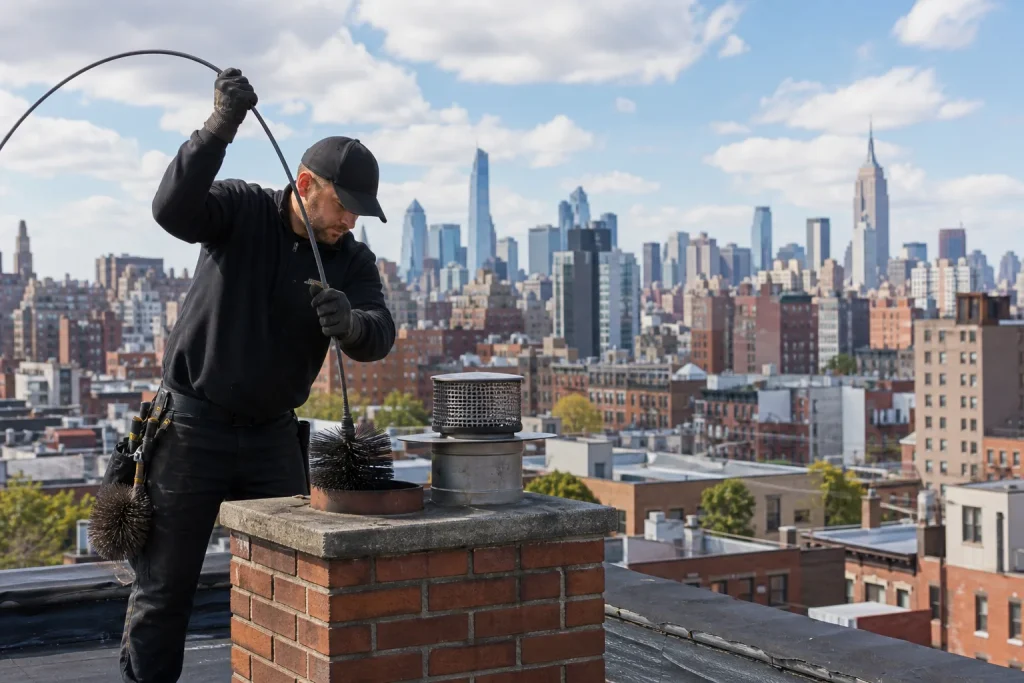
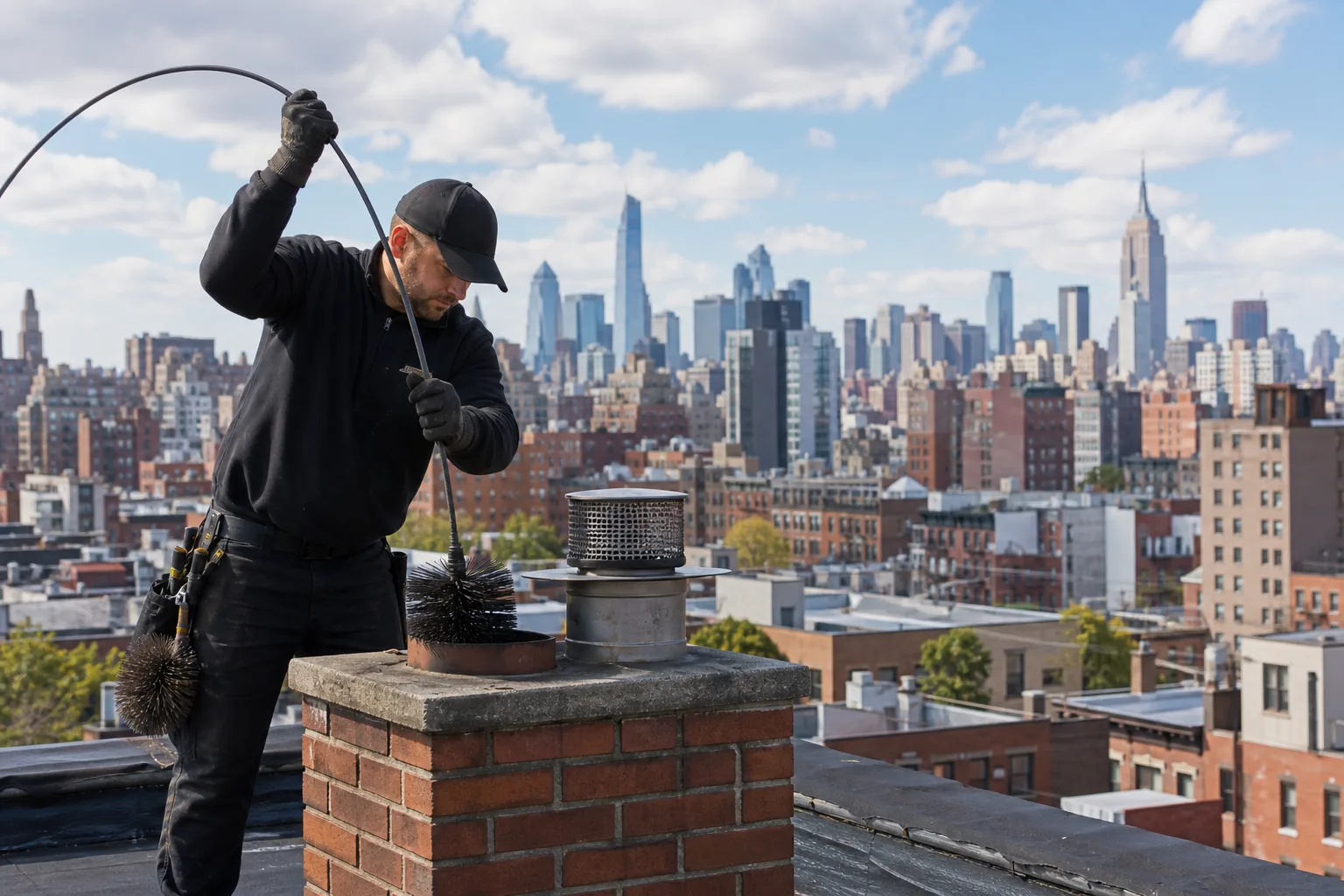
Emergency Chimney Cleaning & Sweep Near Me: What New York City Homeowners Should Do First
If you suspect a chimney emergency in New York City, stop using the fireplace immediately, open windows for ventilation if you smell gas or suspect carbon monoxide, and call 911 if you see flames or heavy smoke from the chimney exterior. For urgent but non-life-threatening issues - a blocked flue, animal intrusion, or suspected creosote buildup - document what you see, note any odors or draft changes, then call a certified sweep who can describe exactly what equipment they’ll bring. If you’d rather not sort this out alone, Hearthstone Chimney Co. of New York City home answers calls with a live person 24 hours a day at (855) 950-3861.
FDNY responds to roughly 400 chimney-related calls per year across the five boroughs. In our experience, a significant portion of those calls turn into bigger problems because the homeowner did one of three things in the first ten minutes: threw water on a chimney fire, continued using the fireplace to “burn it out,” or waited too long to call because they weren’t sure it qualified as an emergency. The first thirty minutes of decisions - not the sweep who eventually shows up - determine whether a situation stays manageable or gets expensive and dangerous. Here’s what to do, in order, before anyone picks up the phone.
The Three Things to Do Immediately - Before Calling Anyone
Every chimney emergency in New York City starts with the same protocol. We’ve refined this over 42 years, and it has never failed us.
- Stop feeding the fire. Close the glass doors if you have them. Close the damper only if you are certain there is no active fire - a closed damper with active combustion forces smoke and carbon monoxide into your living space. In a brownstone in Park Slope last winter, a homeowner closed the damper on a smoldering fire trying to “contain” it. The smoke damage cost twelve times what the original sweep would have.
- Ventilate and evacuate if needed. If you smell gas, rotten eggs, or a sharp chemical odor, open windows on the way out. Do not operate light switches. If you see flames coming from the chimney top or heavy smoke from the exterior masonry, get everyone out of the building and call 911 from the sidewalk. New York City’s tightly packed housing stock means your neighbor’s exposure is your exposure.
- Document from a safe distance. Use your phone to photograph or video what you can see: smoke color (black, white, gray), where it’s exiting, any visible damage to the crown or cap, and the condition of surrounding roofing. This takes thirty seconds and protects you later with insurance, your building’s management, or the sweep who arrives. We’ve seen too many disputes in co-op buildings on the Upper East Side where documentation would have saved months of back-and-forth.
Only after these three steps should you call a sweep - or 911, if the situation warrants it.
FDNY First, or Sweep First? How to Tell the Difference
This distinction matters in New York City more than almost anywhere else. Our buildings are connected, our flues are old, and our fire department knows chimney fires better than most.
Call 911 first if you see:
- Flames visible at the chimney top or through exterior masonry cracks
- Loud cracking or roaring sounds from the flue
- Smoke entering neighboring units (common in shared-wall row houses in Queens and Brooklyn)
- Any injury or suspected carbon monoxide exposure - headache, nausea, confusion
Call a certified sweep first if you have:
- Sudden loss of draft or smoke backing up into the room
- Animal sounds or debris falling into the firebox
- Strong, acrid odor when the fireplace is not in use
- Water staining around the chimney breast after rain
The tell-tale sign is pressure. A chimney fire creates positive pressure - smoke and heat pushing outward with force. A blockage or draft failure creates negative pressure - smoke lingering, struggling to rise, cold air falling. If you’re not sure, err toward 911. A false alarm costs nothing. A delayed call can cost the building.
How to Describe the Emergency Over the Phone
When you call for emergency chimney cleaning in New York City, the quality of your description determines whether the sweep shows up with a rotary system, a camera rig, or a full repair kit. We’ve made second trips that were entirely avoidable because the homeowner said “it’s not working right.”
Here’s what we need to hear:
- Fuel type: Wood, gas, pellet, or oil - each requires different equipment and expertise
- Chimney construction: Masonry, metal factory-built, or lined - common in pre-war Manhattan apartments versus post-war Queens construction
- Symptoms and timing: “Smoke filled the living room twenty minutes after lighting” or “I heard scratching at 6 a.m. for three days”
- Last service date: If you know it, say it. A flue that hasn’t been swept in six years in a wood-burning Park Slope townhouse carries different risks than one swept last season
- Access constraints: Rooftop access, elevator building, narrow stairs, or active scaffolding - all affect what we bring
At Chimney Cleaning & Sweep in New York City, we ask these questions specifically because our technicians carry different kits for different calls. A Level-2 camera inspection requires setup time and space. A basic sweep and blockage removal needs neither. The right information gets you the right response in one visit.
The Risks of 2 A.M. “Emergency” Chimney Services in New York City
Not every after-hours dispatch is equal. New York City’s density creates a specific market for middle-of-the-night chimney calls, and some operators exploit the urgency.
Before agreeing to any emergency dispatch, ask these questions:
- Who exactly is coming? A background-checked, uniformed employee or a subcontractor you’ve never met? We use only our own technicians - no exceptions.
- What does the dispatch fee cover? Some services charge $300-$500 simply to arrive, before any work begins. Our no-hassle upfront pricing means the number you hear on the phone is the number on the invoice.
- Can they perform repairs tonight, or only diagnose? A true emergency service carries materials to complete most jobs in a single visit. If they’re only inspecting at 2 a.m. and scheduling repairs for next week, you’ve paid emergency rates for non-emergency service.
- What is their insurance and licensing status? In New York City, chimney sweeps should carry general liability and workers’ compensation. Ask for proof. A legitimate company provides it without hesitation.
We’ve been called to fix “emergency” repairs done by others at premium rates - improper crown sealing with hardware-store caulk instead of professional-grade materials, temporary patches that failed in the first freeze-thaw cycle. Our technicians work exclusively with brands we trust: Gelco caps, Olympia Chimney liners, Famco dampers, and Copperfield repair products. No builder-grade substitutes, even at midnight.
What happens when you call
- 1
A real person answersNo phone trees - you reach a local pro.
- 2
You get an upfront price rangeHonest numbers before anyone is dispatched.
- 3
A background-checked tech heads outLicensed & insured, dispatched right away.
- 4
You approve before work beginsNothing starts until you say go.
What to Document Before the Sweep Arrives
New York City’s housing landscape - co-ops, condos, rent-stabilized buildings, landmark districts - means chimney work often involves third parties. Documentation protects your interests with all of them.
Photograph or record:
- The firebox interior, showing any debris, damage, or unusual staining
- The chimney exterior from ground level, noting missing or damaged bricks, cap position, and crown condition
- Any smoke or water damage to interior walls, ceilings, or adjacent rooms
- The area around the hearth, including any damaged flooring or mantel
- Your last service receipt or inspection report, if available
If you live in a building with a managing agent or board, email these images to yourself with a timestamp before the sweep touches anything. We’ve seen insurance claims in New York City denied because the “before” condition couldn’t be established. We’ve also seen building management blame tenants for pre-existing damage that a proper photo would have disproved.
When our technician arrives, they’ll document the same things with their own camera during the Level-2 inspection - photos you can see, a plain-English verdict. Having your own parallel record ensures nothing is missed or disputed.
When to Call a Pro - And What Happens Next
If you’ve completed the three-step protocol, assessed whether FDNY or a sweep comes first, and documented what you can, the next call is straightforward. A certified sweep should be able to tell you over the phone whether you’re looking at a same-day emergency visit or a next-morning priority appointment.
At Hearthstone Chimney Co. of New York City, a live person answers every call, 24 hours a day, 7 days a week. Not a voicemail, not a callback queue. We ask the questions above, give you an honest assessment of urgency, and if you need us, we come. Most jobs are completed in a single visit. Every job is backed by our 90-Day Done Right Promise - in writing, no arguing. If it’s not right, we make it right.
Related services in New York City: Chimney Repair in New York City | Fireplace Services in New York City
The Bottom Line
The first thirty minutes of a chimney emergency in New York City belong to the homeowner, not the sweep. Stop the fire, ventilate or evacuate, document what you see. Know the difference between a 911 situation and a certified-sweep situation. Describe symptoms precisely when you call. Ask hard questions of any after-hours service. And protect yourself with photos before anyone starts work.
These steps won’t fix the chimney. They will keep a manageable problem from becoming a dangerous, expensive one. Done right - and we stand behind it.
If you’re in New York City and need help now, Hearthstone Chimney Co. of New York City offers free estimates. Call (855) 950-3861. A live person will answer.
Frequently Asked Questions
Emergency chimney cleaning in New York City typically ranges from $250 to $450 for a standard sweep and inspection, with after-hours or holiday dispatch fees adding $150 to $300 depending on the company and the borough. Complex blockages, animal removal, or Level-2 camera inspections run higher. Call (855) 950-3861 for an exact quote - estimates are free, and our no-hassle upfront pricing means the number you hear is the number on the invoice.
Sometimes a chimney fire burns out after consuming available creosote, but you should never count on it. The fire can crack flue tiles, damage mortar, or ignite surrounding structure without visible warning. If you suspect a chimney fire in New York City, stop using the fireplace, evacuate if flames or heavy smoke are present, and call 911. Even if it seems to subside, the flue must be inspected before any future use.
Signs of a blocked chimney include smoke backing up into the room, a sudden loss of draft, cold air falling from the fireplace when not in use, debris or animal droppings in the firebox, or a strong, acrid odor. In New York City’s older housing stock, blockages from collapsed flue tiles, bird nests, or accumulated creosote are common. A certified sweep can confirm with a camera inspection and clear the obstruction safely.
No. Smoke odor without visible flames can indicate a partial blockage, cracked flue, or dangerous creosote buildup that restricts proper venting. Carbon monoxide, which has no odor, may also be present. Stop using the fireplace immediately, ventilate the space, and call a certified sweep in New York City for inspection before lighting another fire.
Written by the team at Hearthstone Chimney Co. of New York City, serving New York City since 2011.
Need Chimney Cleaning Help?
Call Hearthstone Chimney Co. of New York City - licensed & insured, here with fast after-hours help in New York City.
(855) 950-3861