
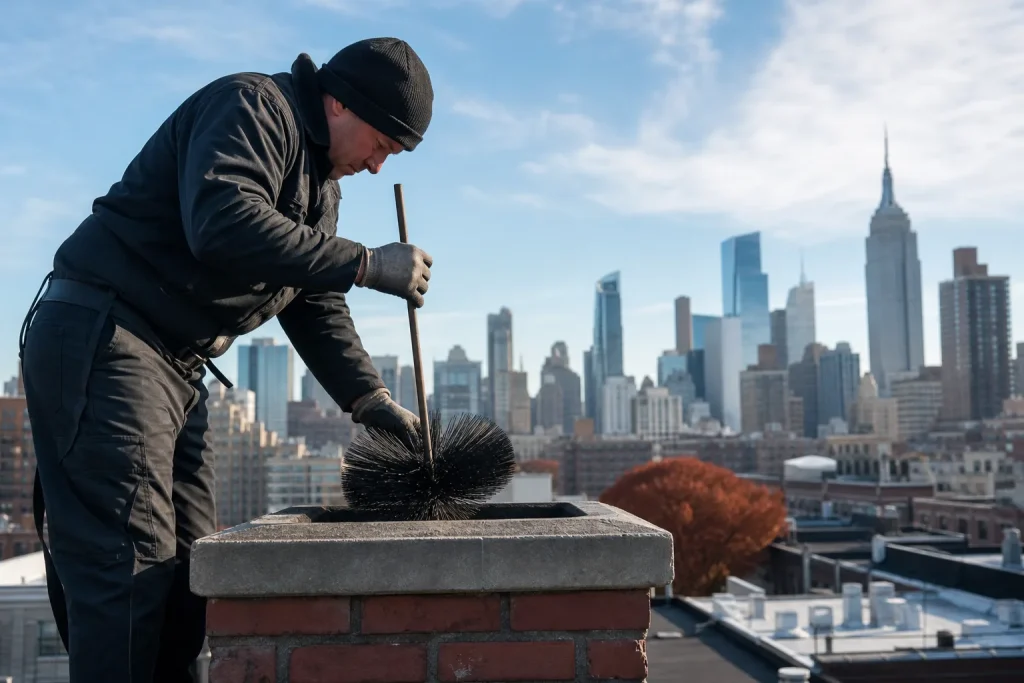
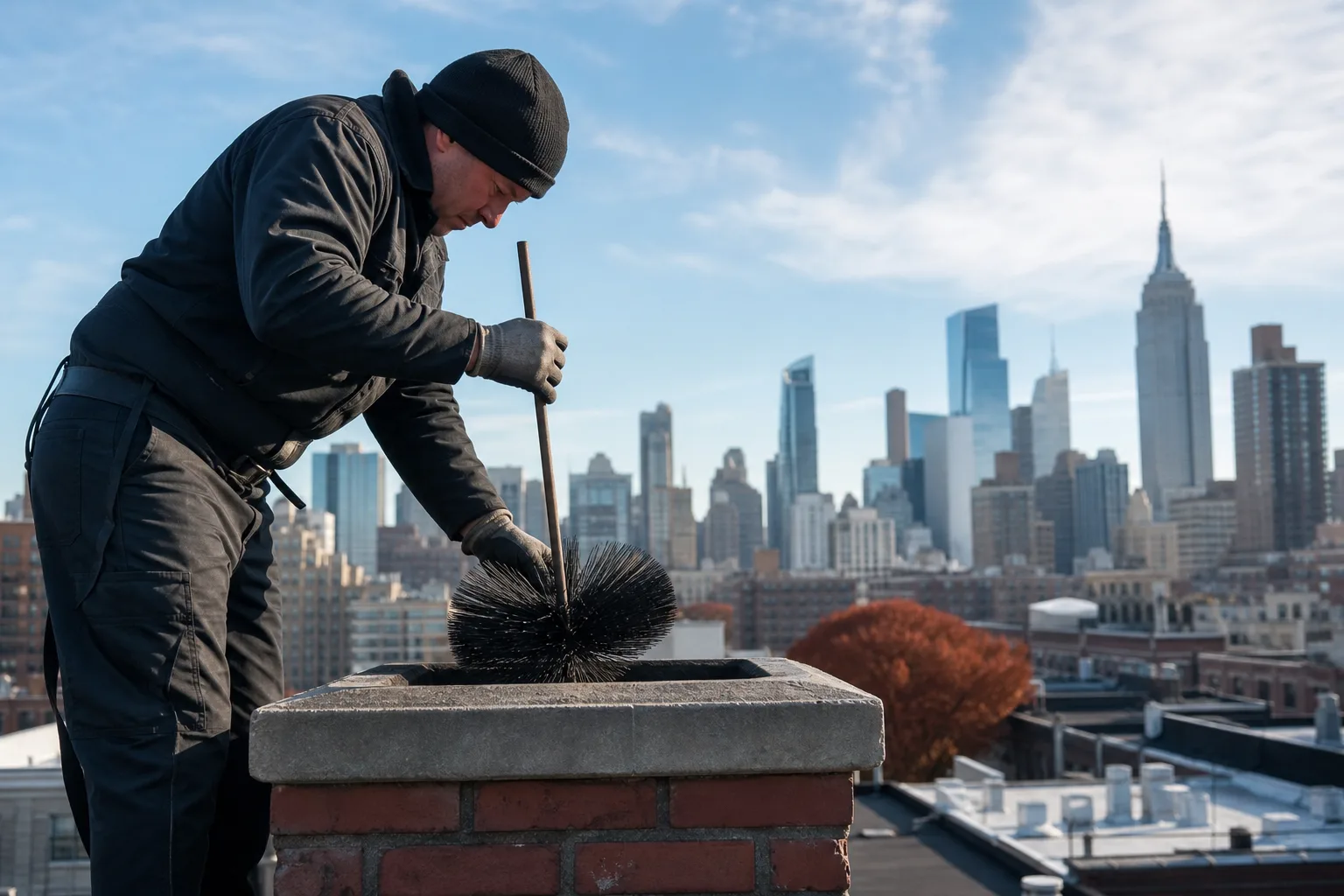
Gelco Chimney Cleaning & Sweep in New York City: A Homeowner’s Guide
Gelco chimney cleaning in New York City typically runs $150-$350 for a standard sweep and Level-1 inspection, with Level-2 camera inspections adding $200-$450 depending on accessibility and flue condition. Whether you hire Gelco or another sweep, the paperwork they leave behind matters more than the logo on their van. If you’d rather skip the checklist and talk to a live person now, call us at (855) 950-3861 - we answer 24 hours a day.
Most chimney complaints filed with the NYC Department of Buildings don’t name a company. They describe a pattern: no written report, no photos, no follow-up. Brand loyalty is worthless when the flue liner is cracked and nobody documented it. We’ve been sweeping chimneys in New York City since 1984, and we’ve seen homeowners burned by big names and one-truck operators alike. The difference isn’t the brand on the truck. It’s whether the sweep can show you what they found and explain why it matters in plain English.
What a Legitimate Chimney Inspection Report Must Include
After any sweep - Gelco included - you should receive a written report before anyone asks for money. Not a verbal summary. Not a text message. A document you can hold in your hand or save to your email. Here’s what belongs in it, line by line:
- Date, address, and technician name - basic, but missing on half the invoices we review from other companies.
- Inspection level performed - Level 1, 2, or 3, per National Fire Protection Association Standard 211. If they don’t specify, they didn’t follow the standard.
- Accessible areas inspected - firebox, smoke chamber, flue liner, crown, cap, exterior masonry. “Chimney checked” means nothing.
- Photo documentation - dated, geotagged images of the flue interior, firebox condition, and any damage found. We use our Level-2 camera system to capture photos the homeowner can see, with a plain-English verdict on what each image means.
- Clear verdict on safety - “Safe to use,” “Safe to use with repairs noted,” or “Do not use until repaired.” Vague language like “monitor condition” without specifics protects the company, not you.
- Recommended repairs with priority ranking - what’s urgent, what’s preventive, and what can wait until next season.
- Estimate for any recommended work - itemized, with no-hassle upfront pricing so the number on the estimate matches the number on the invoice.
Last March, a homeowner in Park Slope showed us a report from another sweep that ran three sentences and ended with “recommend liner replacement - $4,200.” No photos. No explanation of why. We ran our camera and found a cracked clay flue tile at the first joint, repairable with a stainless steel insert from Olympia Chimney for under $1,800. The original sweep wasn’t dishonest. They were sloppy. Sloppiness costs you money.
License and Insurance Questions Every NYC Homeowner Should Ask
New York City requires any contractor doing chimney work to hold a valid Home Improvement Contractor license from the NYC Department of Consumer Affairs. Ask for the license number and verify it online. No exceptions. We’ve heard every excuse - “the office has it,” “we’re licensed in New Jersey,” “the homeowner never asks.” A legitimate sweep hands it over without hesitation.
Insurance matters differently here than in smaller markets. Ask these specific questions:
- Do you carry general liability insurance with a minimum $1 million per occurrence? This is standard for NYC contracting work. Request a certificate of insurance naming you as additional insured before work begins.
- Do you carry workers’ compensation? If a technician falls from your roof and the company lacks coverage, your homeowner’s policy becomes the target. We’ve seen it happen in Queens.
- Are your technicians background-checked and uniformed? You’re letting strangers into your home. In our 42 years, we’ve never sent an unvetted technician to a job.
- Does your company pull permits when required? Certain chimney rebuilds and liner installations in New York City require Department of Buildings permits. A sweep who says “permits aren’t needed for this” without checking the scope is gambling with your compliance.
We answer these questions before homeowners ask. It’s part of how we’ve operated since 1984 - a company that plans to be in New York City in thirty more years acts accordingly.
How to Read a Post-Cleaning Invoice and Spot Unnecessary Upsells
The invoice tells the story. After a standard sweep in New York City, you should see: sweep and inspection fee, condition assessment, and either “no repairs needed” or specific recommended work with itemized costs. Red flags include vague line items (“chimney service - $395”), pressure to decide immediately, or discounts that expire if you don’t sign today.
Common unnecessary upsells we’ve encountered on second opinions:
- “Your flue is too small for modern appliances - needs relining.” Sometimes true. Often, the flue meets code for the existing fireplace. We measure before we recommend.
- “The mortar is crumbling - full rebuild needed.” Tuckpointing or crown repair from Copperfield materials often solves localized deterioration without the $8,000-$15,000 rebuild quote.
- “Waterproofing required annually.” Quality masonry sealant from professional-grade suppliers lasts 5-10 years. Annual reapplication is a subscription, not a service.
Our standing offer: Free Second Opinion on any written estimate. Bring us another sweep’s paperwork. We’ll tell you what’s accurate, what’s inflated, and what questions to ask. No charge, no obligation. In writing, no arguing.
Why Photo Documentation Protects You, Not Just the Company
Photos serve two purposes. The sweep uses them to document findings for liability protection. You use them to verify that what they found actually exists, to compare year-over-year condition, and to show the next company what the previous one observed.
In our experience across New York City neighborhoods, photos have saved homeowners thousands. A co-op board in the Upper West Side once challenged a $6,500 liner replacement we recommended. We showed them the camera footage: a vertical crack running six feet of terracotta flue tile, with daylight visible at the third joint. The board approved the work that afternoon. Without the photo, we’d have been negotiating against skepticism.
Ask any sweep - Gelco or otherwise - these questions about their photo policy:
- Are photos included in the base inspection fee, or extra?
- Can I access them digitally, or only on paper?
- Are they dated and identifiable to my address?
- Will you walk me through each image before recommending work?
Our Level-2 camera inspections end with photos you can see and a plain-English verdict - documented like an engineer, explained like a craftsman. Done right, and we stand behind it.
What Level 1, 2, and 3 Inspections Mean for Your NYC Brownstone or Co-op
The NFPA 211 inspection levels aren’t marketing tiers. They’re defined protocols with specific applications. Most New York City homeowners need to understand the difference because brownstones, pre-war co-ops, and attached townhouses present unique access challenges.
Level 1: Visual inspection of readily accessible portions - firebox, hearth, damper, exterior chimney. Appropriate for annual maintenance when no changes have been made to the system. Takes 45-90 minutes. Cost in New York City: typically $150-$250.
Level 2: Everything in Level 1, plus camera inspection of the flue interior, attic and basement access if available, and examination of clearances to combustibles. Required at property transfer, after chimney fire or seismic event, or when appliance type changes. This is what most NYC brownstones need due to age and shared-wall construction. Takes 1.5-3 hours. Cost: $350-$650.
Level 3: Destructive inspection - removal of building materials to access concealed areas. Only when Level 1 or 2 indicates a serious hazard that cannot be evaluated otherwise. Requires written authorization and often DOB notification. We’ve performed three in 42 years. If a sweep recommends Level 3 routinely, get a second opinion.
Co-op buildings add complexity. Many require board approval for scaffolding, roof access, or work in shared flues. We coordinate this regularly and document all communications for the shareholder’s file.
When to call a pro: If you haven’t had a Level-2 inspection in five years, if you notice mortar debris in the firebox, or if your fireplace smokes into the room despite an open damper. These aren’t DIY diagnostics.
Related services in New York City: For repair work beyond cleaning, see our Chimney Repair in New York City page. For fireplace rebuilds and insert installations, visit Fireplace Services in New York City.
The Bottom Line
Gelco is a recognized name in chimney supplies and services, but the name on the truck doesn’t sweep the flue - the technician does. The questions you ask before work begins, the documentation you receive, and the clarity of your invoice determine whether you got a square deal.
Key takeaways for New York City homeowners:
- Demand a written, photo-documented report with every inspection.
- Verify NYC contractor license and insurance before anyone climbs your roof.
- Understand inspection levels - most pre-war homes need Level 2, not Level 1.
- Get itemized estimates and question vague line items.
- Use your photos to verify findings and compare year-over-year condition.
We’ve served New York City since 1984 with background-checked, uniformed technicians who complete most jobs in a single visit. Our 90-Day Done Right Promise means if it’s not right, we make it right - in writing, no arguing. Calls are answered by a live person 24 hours a day, 7 days a week. If you need a free estimate or a second opinion on another sweep’s paperwork, call (855) 950-3861.
Frequently Asked Questions
A standard chimney sweep and Level-1 inspection in New York City typically costs $150-$350, while a Level-2 inspection with camera runs $350-$650 depending on flue accessibility and building type. Brownstones and co-ops often require more time due to roof access constraints. Call (855) 950-3861 for an exact quote - estimates are free.
Repair is usually cheaper when damage is localized to one or two clay flue tiles. A stainless steel liner insert from DuraFlex or Olympia Chimney often costs $1,200-$2,800 versus $4,000-$8,000 for full reconstruction. However, if the flue is oversize for your appliance or multiple tiles are cracked, replacement saves money long-term by improving draft efficiency and reducing creosote buildup. We evaluate each case with camera documentation before recommending either path.
Same-day service is often available for standard sweeps, though Level-2 inspections typically require scheduling due to equipment and time requirements. During peak season (September through January in New York City), we recommend booking 1-2 weeks ahead. Emergency calls for blocked flues or suspected chimney fires receive priority. Call (855) 950-3861 - a live person answers 24/7.
Legitimate recommendations include specific findings (crack location, measurement, photo), reference to code or safety standard, and itemized pricing with no pressure to decide immediately. Red flags: vague descriptions, discounts expiring today, reluctance to provide written documentation. Our free second opinion service lets you bring any written estimate to us for review - no charge, no obligation.
Written by the team at Hearthstone Chimney Co. of New York City, serving New York City since 2011.
Need Chimney Cleaning Help?
Call Hearthstone Chimney Co. of New York City - licensed & insured, here with fast after-hours help in New York City.
(855) 950-3861